
Bank Rate rises to 4%: what it means for your business
The Bank of England raised Bank Rate to 4% on 5 November 2026. What it means for business overdrafts and loans, whether rates could rise again, and how to check your facility letter.
The Bank of England raised Bank Rate from 3.75% to 4% on 5 November 2026, its first rise in more than three years. If your business has an overdraft or loan on a variable rate, expect your lender to pass on some or all of the rise, and the Bank has signalled that this may not be the last increase.
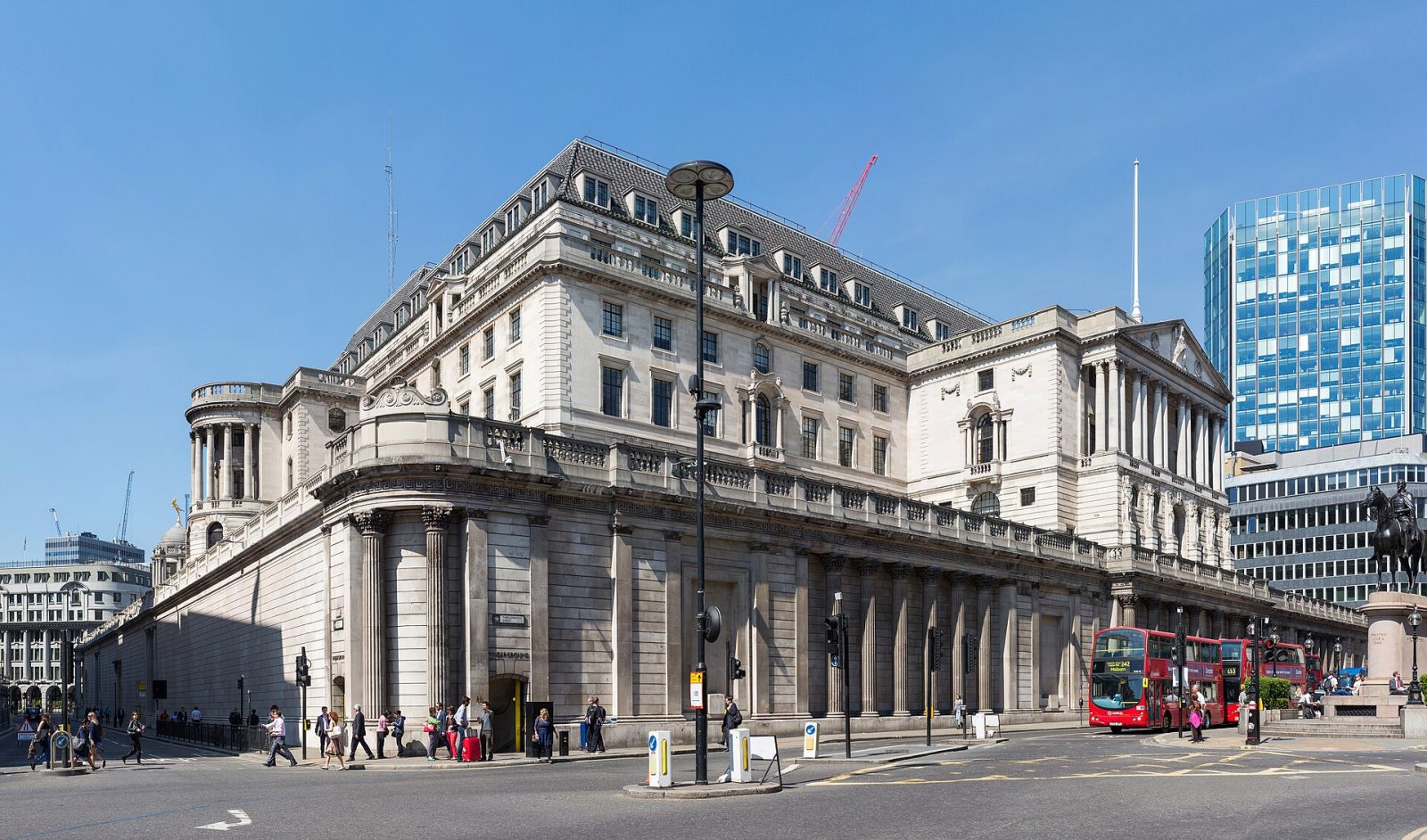
Photo: Bank of England Building, London, UK - Diliff by Diliff, CC BY-SA 3.0, via Wikimedia Commons
What did the Bank of England decide?
The Bank's Monetary Policy Committee voted 8–1 to raise Bank Rate by 0.25 percentage points to 4%. The one member who disagreed, Catherine Mann, voted for a bigger rise, to 4.25%.
The main reason is energy. The Bank says the conflict in the Middle East, now in its ninth month, has pushed up oil and gas prices. Inflation was 3.5% in September, and the Bank now expects it to rise to around 5% by the middle of next year before falling back. It raised rates to limit how far higher energy costs spread into other prices and wages.
Will interest rates go up again?
Nobody can say for certain. The Bank says monetary policy "is not on a pre-set path", and its members did not all give the same message.
- Governor Andrew Bailey said this rise should not be seen as the first in an inevitable long run of rises, but that unless the conflict is resolved it does not seem likely to be the last.
- Several other members said further rises were likely to be needed.
- One member, Alan Taylor, said the next move could be up, down or sideways.
The next decision is due on 17 December 2026. For planning, it makes sense to test your budget against borrowing costs staying where they are for some months, and against one more rise.
What this means for your business
How much the rise reaches you depends on how each of your facilities is priced.
- Overdrafts and variable-rate loans. If the rate is set as a margin over Bank Rate or over your lender's own base rate, it will usually move after a change. The Bank points out that lenders' rates can also move for other reasons, and not always by the same amount.
- Fixed-rate loans and fixed-term finance agreements. Your repayments should not change during the fixed period. The rise matters when the agreement ends or you borrow again.
- New borrowing. New quotes are likely to cost more, and many lenders had already priced in an expected rise.
- Revenue-based finance. Revenue-based finance (sometimes called a merchant cash advance) is repaid as a share of your future card or online takings, so repayments go up and down with your sales. Check your agreement to see whether the cost was fixed at the start. It usually costs more than a standard business loan, and the total cost depends on how quickly you repay.
- Your costs and your customers. Energy is driving this rise, so higher running costs and more cautious customers can hit cash flow as hard as the interest itself. The Federation of Small Businesses said the rise will push up the cost of credit "while leaving households with less money to spend".
How we check a facility letter after a rate rise
When an owner sends us an overdraft or loan letter after a rate change, we work through the same six points. You can do this yourself in half an hour.
- Find the pricing clause. Look for wording such as "over Bank Rate", "over base rate", "fixed" or "variable". If it says the lender's own base rate, ask the lender whether, and from when, that rate will follow Bank Rate.
- Find the change clause. It tells you how the lender notifies you of a new rate and from what date it applies.
- Use your average balance, not your limit. Interest is charged on what you actually use. Twelve months of bank statements show your typical balance and whether it ever clears.
- Size the change. As simple arithmetic, a 0.25 percentage point rise adds about £25 a year in interest for every £10,000 of average variable-rate borrowing, if the lender passes it on in full. Your own figure depends on your balance and terms.
- Check the fees as well as the rate. Arrangement, renewal and unarranged-borrowing charges can matter more than a quarter-point.
- Note any renewal dates in the next 12 months. That is when today's rates meet your agreements.
The answer is often "leave it alone". But if the overdraft balance never clears, it has become long-term borrowing at a short-term price, and a loan with fixed repayments may be worth comparing. Our earlier guide to what to check when rates rise has a fuller checklist.
Practical steps this month
- Read any letter or email from your bank about rate changes, and note the date the new rate applies.
- List every facility with its balance, rate, whether it is fixed or variable, and its end date.
- Compare the full cost before refinancing. Include arrangement fees and early repayment charges, not just the headline rate. Approval and terms depend on your trading history.
- Don't borrow just to beat a possible future rise. Borrow for a clear purpose you can afford if rates go higher.
- Review your card fees. They are not usually linked to Bank Rate, but they come out of every sale, so lowering them frees cash without borrowing. See what your card statement actually charges you.
- Update your cash flow forecast for higher energy costs, and check whether your prices still cover them.
- Put 17 December in your diary for the next rate decision.
Frequently asked questions
Does the Bank of England rate rise affect my existing business loan?
Only if the loan has a variable rate. A loan fixed for its term keeps the same rate until the fixed period ends. Your loan agreement says which applies.
When will my overdraft rate go up?
It depends on your lender and your agreement. Many variable rates follow a Bank Rate change, but the timing and amount are set by each lender. Check your facility letter or ask your bank directly.
Is now a bad time to borrow?
Not necessarily. Borrowing costs more than it did a month ago, and it may rise again, but a facility that funds stock, equipment or a gap in cash flow can still make sense if the repayments fit your figures. Compare the total cost, and only borrow what you need.
Talk it through with us
We can review what you pay to take card payments through a free card fee review, and we can compare business finance options from our panel of lenders and providers if your overdraft has become permanent borrowing. There is no obligation.
Call or WhatsApp 07777 175890, email sales@josfinserv.co.uk or book a free card fee review.
Jos Finserv Ltd (company no. 14560046) is an independent broker. For business finance we are a credit broker, not a lender, and we may receive commission from providers. Approval and terms depend on your trading history. No obligation.
Sources
Want us to look at your own numbers?
Tell us how to reach you and we will come back with what is actually available for a business like yours. We are paid by the provider, not by you, so this costs you nothing either way.
- We read your current statement and explain it in plain terms
- No obligation, and no pressure to move if you are already well placed
- One conversation, not a sequence of calls
Prefer to work it out yourself first? Use the card fee calculator, or check whether finance is worth exploring.
