
Interest rate rise expected: what it means for you
The Bank of England is widely expected to raise Bank Rate on 5 November 2026. Here is how a rise could affect your overdraft and loans, how to size the impact, and the steps to take now.
The Bank of England is widely expected to raise interest rates on Thursday 5 November 2026, which would be its first rise since 2023. If it does, businesses with variable-rate borrowing, such as many overdrafts and some loans, are likely to pay more, so this is a good week to check what you owe and how each facility is priced.
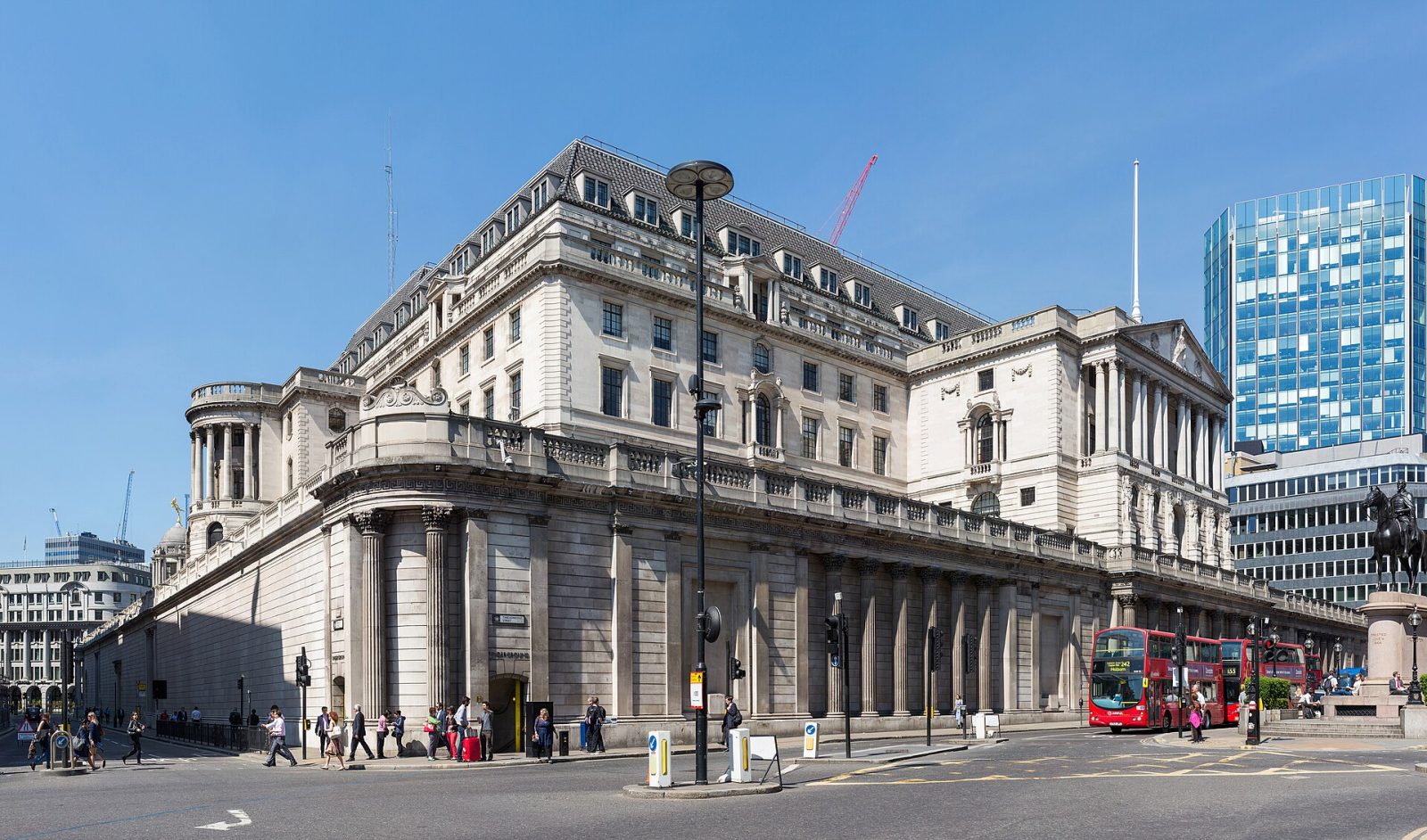
Photo: Bank of England Building, London, UK - Diliff by Diliff, CC BY-SA 3.0, via Wikimedia Commons
Why are interest rates expected to go up?
Bank Rate has been 3.75% since December 2025. At its last decision on 17 September 2026, the Bank's Monetary Policy Committee voted 6–3 to hold, with three members already voting for a rise.
Since then, inflation has moved further away from the Bank's 2% target. The Office for National Statistics reported on 21 October that prices rose 3.5% in the year to September, up from 3.1% in August. Motor fuel made the largest upward contribution, with fuel prices up 29.8% over the year.
Most forecasters now expect a quarter-point rise, taking Bank Rate to 4%. In a Reuters poll published on 15 October, 54 of 63 economists expected that increase, and several forecasters expect another rise early in 2027.
What this means for your business
A change in Bank Rate does not affect every type of borrowing in the same way. The Bank of England explains that when Bank Rate rises, banks usually raise the cost of their loans, although lending rates can also move for other reasons and not always by the same amount.
What matters is how each of your facilities is priced:
- Variable-rate borrowing. Many overdrafts and some business loans are linked to Bank Rate or to the lender's own base rate. These usually move after a Bank Rate change. Your facility letter says how and when.
- Fixed-rate loans and finance agreements. If your rate is fixed for the term, a rise on 5 November should not change your repayments on that agreement. It matters when you refinance or borrow again.
- New borrowing. Lenders price new offers partly on where they expect rates to go, so quotes may already reflect an expected rise.
- Revenue-based finance. Revenue-based finance (sometimes called a merchant cash advance) is repaid as a share of your future card or online takings, so repayments go up and down with your sales. Check whether its cost is a fee agreed at the start or linked to a variable rate. It usually costs more than a standard business loan, and the total cost depends on how quickly you repay.
A quick way to size the impact
As a simple illustration, a 0.25 percentage point rise adds about £25 a year in interest for every £10,000 of variable-rate borrowing you carry on average. So a business with an average overdraft balance of £40,000 would pay roughly £100 more a year for each quarter-point rise, if its bank passes the change on in full. Your own figure depends on your balance, your rate and your lender's terms.
That sounds modest on its own. It adds up if rates rise more than once, if several facilities are variable, or if your overdraft balance never returns to zero.
How we review a business's borrowing when rates are changing
When an owner asks us to look at their finance, we start with a simple list rather than a product. You can do the same:
- List every facility: overdraft, loans, business credit cards, asset finance and any revenue-based finance. For each, note the balance, the rate, whether it is fixed or variable, the end date and any early repayment charge.
- Mark the ones that move with Bank Rate. These are the ones a rise on 5 November will reach first.
- Check 12 months of bank statements for your average overdraft balance and whether it ever clears. A balance that never clears is really long-term borrowing at a short-term price. Our article on rising business overdraft use explains why that matters.
- Note any renewal or refinance dates in the next 12 months, because that is when today's rates will meet your agreements.
- Look at the costs you control. Card fees come out of every sale. They are not usually linked to Bank Rate, but they can cost more than you realise, and lowering them frees cash without borrowing.
The choices that follow are usually simple: leave things as they are, move a stubborn overdraft balance to a loan with fixed repayments, or pay down the most expensive debt first. Approval and terms depend on your trading history.
Practical steps before 5 November
- Find your facility letters and check which rates are fixed and which are variable.
- Ask your bank how your overdraft rate will change if Bank Rate rises, and from what date.
- If you already plan to borrow, for equipment, stock or a refit, compare quotes now, including arrangement fees and early repayment charges. Don't take on borrowing you don't need just because rates may rise.
- Review your card fees. Ask your provider for a breakdown of transaction, monthly and terminal charges. Our guide to what your card statement actually charges you shows what to look for.
- Tighten cash coming in. Invoice promptly and chase late payers. Our article on the Commercial Payments Bill covers the rights you already have.
- Diary the next decisions. After 5 November, the Bank's next announcements are due on 17 December 2026 and 4 February 2027 (provisional).
Frequently asked questions
Will my business loan repayments go up if interest rates rise?
Only if the loan has a variable rate. Fixed-rate loans keep the same rate for the agreed term. Overdrafts are often variable, so check your facility letter or ask your bank.
Should I fix my business borrowing now?
It depends on your plans and your appetite for risk. A fixed rate gives certainty, but it may cost more at the start and can carry early repayment charges. Nobody can promise where rates will go next. Compare the full cost, not just the rate. Approval and terms depend on your trading history.
Do card machine fees go up when interest rates rise?
Card processing fees are not usually linked to Bank Rate. They are set by your provider's pricing and the card schemes' charges. Because they are taken from every sale, though, reviewing them is one of the quickest ways to ease cash flow when borrowing costs rise.
Talk it through with us
We can review what you pay to take card payments through a free card fee review, and we can compare business finance options from our panel of lenders and providers if a loan with fixed repayments would suit you better. There is no obligation.
Call or WhatsApp 07777 175890, email sales@josfinserv.co.uk or book a free card fee review.
Jos Finserv Ltd (company no. 14560046) is an independent broker. For business finance we are a credit broker, not a lender, and we may receive commission from providers. Approval and terms depend on your trading history. No obligation.
Sources
- Office for National Statistics: Consumer price inflation, UK: September 2026
- Bank of England: What is happening with interest rates?
- HomeOwners Alliance: Will the Bank of England raise interest rates on 5 November?
- Euronews: UK inflation jumps more than expected, fuelling rate hike expectations (21 October 2026)
- Trustnet: November interest rate hike a "done deal" as UK inflation hits 3.5%
Want us to look at your own numbers?
Tell us how to reach you and we will come back with what is actually available for a business like yours. We are paid by the provider, not by you, so this costs you nothing either way.
- We read your current statement and explain it in plain terms
- No obligation, and no pressure to move if you are already well placed
- One conversation, not a sequence of calls
Prefer to work it out yourself first? Use the card fee calculator, or check whether finance is worth exploring.
