
Mobile Card Machines: A Complete Guide for UK Businesses
Portable and mobile are not the same thing. Which businesses need a mobile card machine, the signal and battery questions to ask first, and where the costs bite differently.
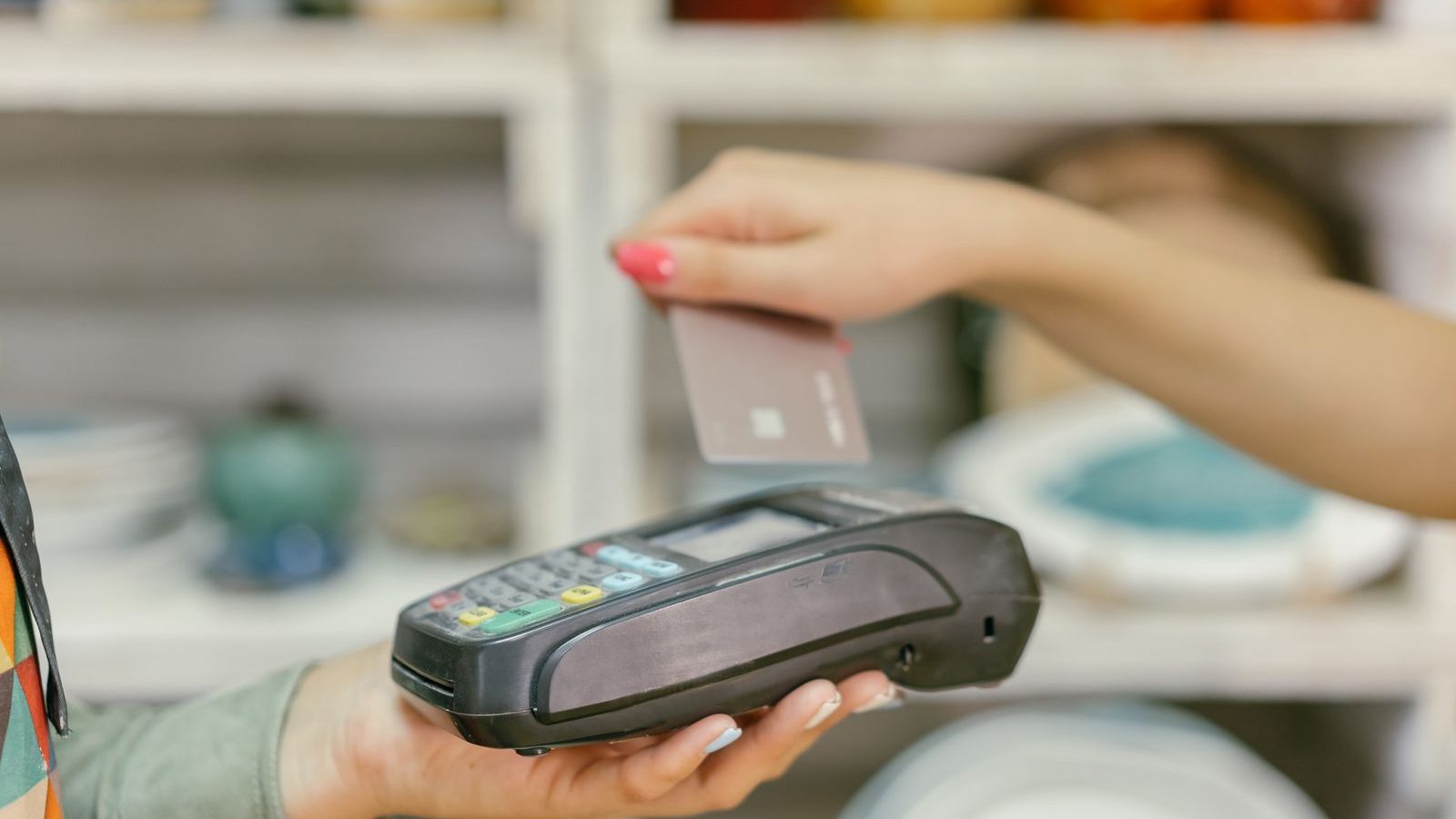
Photo by Mikhail Nilov on Pexels
A plumber finishes a boiler service at four in the afternoon. The customer asks how to pay. If the answer is "I'll post an invoice", that money arrives in three weeks, or six, or after two chasing calls. If the answer is a card machine held out on the doorstep, it arrives tomorrow.
That is what mobile card machines are actually for. Not convenience, cash flow.
This guide covers how they differ from the terminals in shops, which businesses genuinely need one, what to ask about signal and battery before you commit, and where the costs bite differently than they do on a counter.
What makes a machine mobile
The distinction people miss is between portable and mobile, and providers do not always help.
| Type | How it connects | Works where |
|---|---|---|
| Countertop | Broadband or phone line | At the till only |
| Portable | Wi-Fi or Bluetooth to a base station | Anywhere on your premises |
| Mobile | Mobile data, usually a SIM in the device | Anywhere with signal |
| Phone-paired reader | Bluetooth to your phone, phone provides the data | Anywhere your phone works |
A portable terminal handed to a waiter is not going to work at a customer's house three miles away. If your work happens away from your own premises, you need mobile data or a phone-paired reader, and asking the question in those terms avoids an expensive misunderstanding.
Who this actually suits
Tradespeople
Plumbers, electricians, joiners, roofers, gardeners, locksmiths. Payment happens at the customer's property, one job at a time, and the values are often high.
The cash flow argument is the whole argument. Taking payment on completion removes the invoice, the wait, the chase, and the awkward second phone call. For a sole trader that difference is not administrative, it is whether you can buy materials for next week's job.
Market traders
No premises, no Wi-Fi, and frequently weak signal on a Tuesday in a field.
This is the group with the most specific technical requirement, covered below.
Mobile services
Mobile hairdressers, dog groomers, physiotherapists, driving instructors, mobile valeting. Several locations a day, often carrying everything between them.
Weight and battery matter more than screen size, and a car charger is worth more than any feature on the specification sheet.
Delivery
Takeaways and small couriers taking payment at the door. The requirement here is a battery that survives a full shift and a device a driver can operate one-handed in the rain.
Events and pop-ups
Caterers, festival stalls, craft fairs, wedding suppliers. Usually short bursts of intense trading with long quiet stretches between, which changes what kind of agreement makes sense.
Hospitality, sometimes
A pub garden across a car park, or a beach hut, may be beyond Wi-Fi range even though it is your own premises. A mobile terminal solves what a portable one cannot.
Signal, which is the whole game
Everything else about a mobile terminal is negotiable. Signal is not.
Ask which networks the device can use. A terminal locked to a single network will fail wherever that network is weak. A multi-network device roams to whichever signal is strongest at that spot, which is why traders and rural tradespeople should treat this as the first question, not a detail.
Ask what happens when signal drops mid-transaction. Some terminals store the transaction and complete it when signal returns. Others simply fail. The difference matters at a customer's front door.
Test it where you actually work. A demonstration in an office with full signal tells you nothing about a Tuesday market in a valley.
Ask about tethering. Some devices can use your phone's connection as a fallback. That single feature has rescued more market days than any other.
Battery
Specifications are written for a device sitting idle. Ask instead:
- Roughly how many transactions on a full charge
- How long a full charge takes
- Whether a car charger exists
- Whether a spare battery can be swapped, or whether the device is sealed
- What happens to a queued transaction if it dies mid-payment
A driver on a Friday night and a trader at a two-day fair have the same problem and it is not solved by a bigger screen.
Where the money goes differently
Mobile businesses are charged on the same structures as everyone else, but two of them land harder.
Minimum monthly service charge. If your processing fees fall below an agreed figure, you pay the difference anyway. A trader working a season, a wedding supplier busy from May to September, or a tradesperson with a quiet January all hit this. It is the single most important question for anyone whose trade is uneven, and it is the one least likely to be volunteered.
Percentage rate versus per-transaction fee. Which matters depends entirely on your average sale.
| Business | Typical sale | What dominates the bill |
|---|---|---|
| Tradesperson | High, low volume | The percentage rate |
| Market trader | Low, high volume | The fixed fee per transaction |
| Mobile hairdresser | Middling, steady | Roughly balanced; watch the monthly minimum |
| Event caterer | Low, very concentrated | Fixed fee, plus the minimum in quiet months |
A trader taking four hundred small payments on a Saturday and a plumber taking three large ones should not be comparing the same number, and a provider quoting them the same headline rate is telling them very little.
There is a full breakdown of the charge structure in our guide to how much a card machine costs in the UK.
Receipts, security and the practical bits
Most mobile terminals email or text a receipt rather than printing one, which is fine and usually preferred. Check the device can do it without a printer attached, because printer-equipped models are heavier and the paper runs out at the worst moment.
On security, the obligations are the same as anywhere: the current standard is PCI DSS v4.0.1, mandatory since 1 April 2025, and for a business taking payments through a terminal it usually means an annual Self-Assessment Questionnaire through your acquirer rather than an audit.
Two habits matter more when the device leaves the premises:
- Never leave a terminal in a vehicle overnight
- Check it each morning for signs of tampering or substitution
Contactless limits are now set by each card issuer rather than by regulation, so do not quote a figure to customers. Our guide to contactless payments explains what changed in March 2026 and what to tell staff.
Key takeaways
- Portable and mobile are different things; portable will not work at a customer's house
- For trades, the real benefit is cash flow, not convenience
- Multi-network devices are far more dependable than single-network ones
- Ask what happens when signal drops mid-transaction
- Seasonal and uneven trade makes the minimum monthly charge the key question
- Low average sale values make the fixed per-transaction fee dominant, not the percentage
How Jos Finserv Can Help
Jos Finserv can help eligible UK businesses explore mobile payment options suited to how and where they actually trade, including businesses that work seasonally, travel between sites, or take payment at a customer's premises.
We are a broker rather than a payment provider, so what is available to any particular business depends on the provider's criteria and that business's circumstances.
Looking for a card payment solution that works away from a counter?
Explore the options available through Jos Finserv, or check whether finance is worth exploring if you are funding equipment or a vehicle.
Important: Payment solutions are subject to provider eligibility criteria. Hardware availability, network coverage, battery performance, pricing and contract terms vary between providers and devices. Nothing in this article is a quote or a recommendation of a specific product. Businesses should confirm coverage and total cost before entering an agreement.
Want us to look at your own numbers?
Tell us how to reach you and we will come back with what is actually available for a business like yours. We are paid by the provider, not by you, so this costs you nothing either way.
- We read your current statement and explain it in plain terms
- No obligation, and no pressure to move if you are already well placed
- One conversation, not a sequence of calls
Prefer to work it out yourself first? Use the card fee calculator, or check whether finance is worth exploring.
