
How to Choose the Right Card Machine for Your Small Business
Which card machine suits a cafe, a market stall, a plumber or a solicitor, matched to how each trade actually takes money, with the questions each should ask.
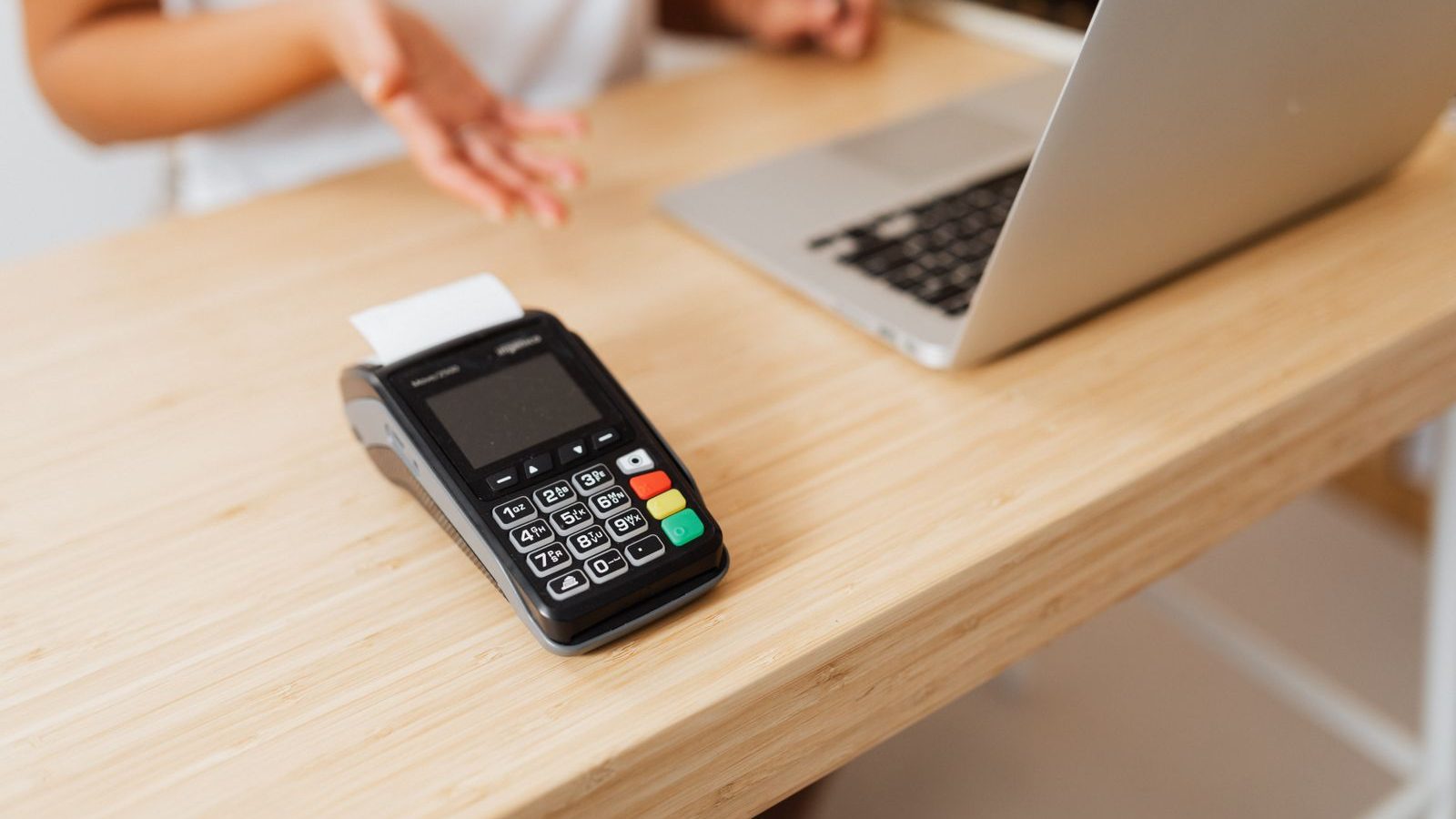
Photo by Karola G on Pexels
The right card machine is determined less by features than by geography: where in your business does money change hands, and does that spot move?
A solicitor taking four payments a month has almost nothing in common with a burger van taking four hundred on a Saturday, yet both are sold from the same product range. This guide works through eight types of UK business, what each one actually needs, and the specific question each should press hardest on.
Start with four questions
Before comparing devices, answer these about your own operation.
- Where does the customer pay? A fixed counter, a table, a doorstep, a field?
- How many transactions on your busiest day? Not your average, your peak.
- What is your average sale worth? Under about a tenner changes which fees matter.
- Is your trade even across the year? Seasonality affects contract terms more than hardware.
Those four answers narrow the field faster than any feature list.
Retail shops
Typical need: a countertop terminal connected to broadband.
Payment happens at a fixed till. Mobility buys you nothing, and a wired connection is more reliable than Wi-Fi on a busy Saturday. Integration with an electronic point of sale system is worth considering if you carry many lines, because it removes the double-entry of ringing a sale into the till and then keying the amount into the terminal.
Press hardest on: what happens when broadband fails. Ask whether the terminal can fall back to a mobile connection. A shop that cannot take cards for an afternoon loses the afternoon.
Restaurants
Typical need: portable terminals, one per section rather than one per venue.
Paying at the table is now the expectation rather than a courtesy, and it removes the awkward walk to the till. Tipping support matters: staff should be able to add a gratuity at the terminal, and you need to understand how those amounts are reported for your own payroll and records.
Press hardest on: Wi-Fi coverage across the whole floor, including the far corner and the terrace. Test it before signing, not after. Also ask how many terminals a single base station supports.
Cafes and coffee shops
Typical need: a countertop terminal, and pricing built around low-value sales.
The hardware question is easy. The pricing question is not. On a flat white costing a few pounds, a fixed per-authorisation fee is a much larger share of the sale than any percentage. A cafe doing 300 sales a day generates roughly 9,000 authorisations a month.
Press hardest on: the per-transaction fixed fee, and speed. A terminal that takes an extra three seconds per customer creates a visible queue at eight in the morning.
Takeaways
Typical need: a countertop terminal, plus a way to take payment at the door if you deliver.
Two different payment moments, often overlooked. Counter collection and doorstep delivery have different requirements, and a driver needs a device that works on mobile data with a battery that survives a full shift.
Press hardest on: battery life under real use, and whether a second device costs a second rental.
Market traders
Typical need: a mobile terminal with its own data connection.
No fixed premises, no Wi-Fi, frequently poor signal. Ask which mobile networks the device can use. A terminal locked to one network will fail at a site where that network is weak, while a multi-network device roams to whichever is strongest.
Press hardest on: offline behaviour. What happens when signal drops mid-transaction? And check whether your pitch fees and trading pattern sit awkwardly with a minimum monthly service charge, since many traders work a short season.
Tradespeople
Typical need: a mobile terminal or a phone-paired reader.
Plumbers, electricians, joiners and gardeners take payment at the customer's property, usually one job at a time. Volume is low, values are often high, so the percentage matters more than the per-transaction fee, the reverse of the cafe.
Taking payment on completion rather than invoicing later has a direct effect on cash flow, which is frequently the real reason a trade business gets a terminal at all.
Press hardest on: whether a low-volume month triggers a minimum monthly charge, and whether the device can email a receipt without a printer.
Mobile services
Typical need: a mobile terminal, chosen for portability and battery.
Mobile hairdressers, dog groomers, physiotherapists, driving instructors and caterers all work across multiple locations in a day. Weight and battery matter more than screen size.
Press hardest on: how many transactions the battery supports and whether a car charger is available.
Professional services
Typical need: often no terminal at all.
Solicitors, accountants, consultants and architects usually invoice and receive bank transfers. A handful of clients who want to pay by card may be better served by a payment link or a virtual terminal than by hardware that sits in a drawer accruing rental.
Press hardest on: whether a monthly minimum makes a rarely used terminal expensive. For four transactions a month, hardware is often the wrong answer.
Matching trade to machine
| Business type | Usual machine | The fee that matters most |
|---|---|---|
| Retail shop | Countertop | Percentage rate; connection backup |
| Restaurant | Portable | Number of devices; rental per unit |
| Cafe | Countertop | Fixed per-transaction fee |
| Takeaway | Countertop plus mobile | Second device rental |
| Market trader | Mobile | Minimum monthly charge |
| Tradesperson | Mobile or phone reader | Percentage rate; minimum charge |
| Mobile service | Mobile | Battery and portability |
| Professional services | Often none | Minimum monthly charge |
Two mistakes worth avoiding
Buying for your best week. A business that needs four terminals for a December fortnight does not need four terminals in February. Ask about short-term hire for peak periods before committing to year-round rentals.
Choosing hardware before pricing. The device is usually the smaller decision. A cafe that picks a terminal it likes and accepts whatever per-transaction fee comes with it has optimised the wrong variable.
Key takeaways
- Where payment happens, and whether that place moves, decides the device
- Low average sale values make fixed per-transaction fees the dominant cost
- High-value, low-volume trades should focus on the percentage and the monthly minimum
- Test Wi-Fi coverage before choosing portable terminals for hospitality
- Multi-network mobile terminals are more dependable for traders and mobile services
- Very low volumes may not justify a terminal at all
How Jos Finserv Can Help
Jos Finserv can help eligible UK businesses explore payment options suited to how they actually operate, including businesses that trade seasonally, work across multiple sites, or take payment away from a fixed counter.
We are a broker rather than a payment provider, so what is available to any particular business depends on that provider's criteria and the business's circumstances.
Looking for a card payment solution for your business?
Explore the options available through Jos Finserv, or read how much a card machine costs in the UK before you talk to anyone.
Important: Payment solutions are subject to provider eligibility criteria. Hardware availability, pricing, contract terms and features vary between providers. Nothing in this article is a quote or a recommendation of a specific product for a specific business. Businesses should confirm technical suitability and total cost before entering an agreement.
Want us to look at your own numbers?
Tell us how to reach you and we will come back with what is actually available for a business like yours. We are paid by the provider, not by you, so this costs you nothing either way.
- We read your current statement and explain it in plain terms
- No obligation, and no pressure to move if you are already well placed
- One conversation, not a sequence of calls
Prefer to work it out yourself first? Use the card fee calculator, or check whether finance is worth exploring.
