
Card Machines for Small Businesses: A Complete UK Guide
How card machines actually work, the four types UK businesses can choose from, what sits behind the fees, and the questions to ask before you sign anything.
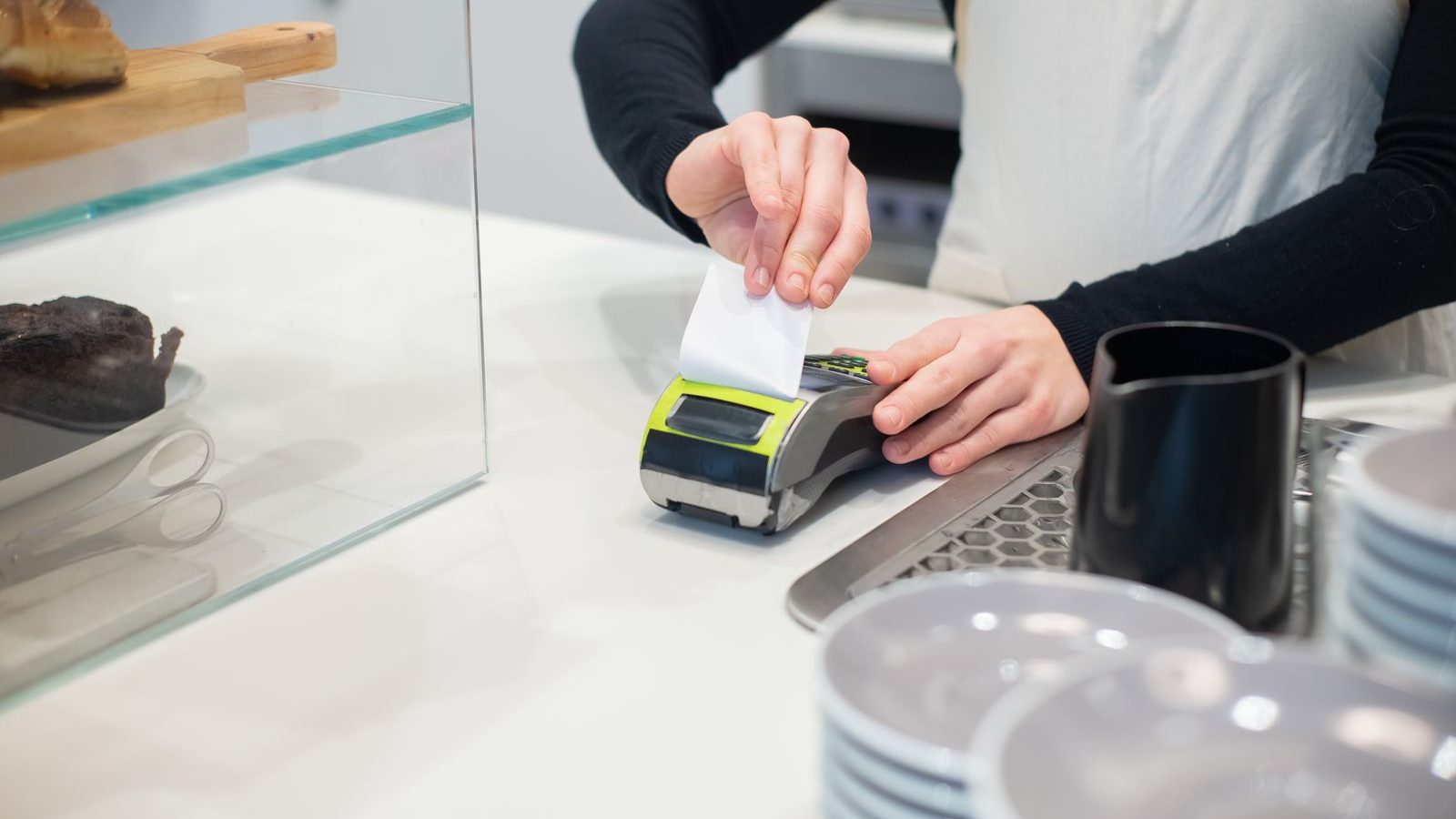
Photo by Kampus Production on Pexels
Most guides to card machines start by telling you that customers expect to pay by card. You already know that. What is harder to find is a plain explanation of what actually happens between a customer tapping their card and money arriving in your account, and why that chain determines everything you will later be charged for.
This guide covers the mechanics, the four types of machine sold in the UK, who the parties in a card payment are, and the questions worth asking before you commit to an agreement. It is written for owners who have never taken card payments and for those who have had a terminal for years without ever being told how the pricing works.
What a card machine actually is
A card machine, or payment terminal, is a device that reads a customer's card and asks permission to take money from their account. It does not move the money itself. It is the first link in a chain.
The terminal captures the card details, encrypts them and sends an authorisation request. Seconds later it receives an answer: approved or declined. The funds themselves settle later, usually the next working day or a few days after, depending on your agreement.
That distinction between authorisation and settlement matters more than it sounds. An approval at the till is not the same as money in your bank. When a provider quotes you a settlement time, they are describing the second step.
Who is involved in a card payment
Five parties sit behind every tap, and each one takes a view or a cut.
| Party | Role |
|---|---|
| Cardholder | Your customer |
| Issuer | The customer's bank, which decides whether to approve |
| Card scheme | Visa or Mastercard, which routes the message and sets the rules |
| Acquirer | The bank or processor that holds your merchant account |
| Payment provider | Who you deal with day to day, often reselling an acquirer's service |
The company whose name is on your terminal is frequently not the acquirer. That is normal, but it is worth knowing, because it explains why some questions get vague answers and why terminal hire and card processing are often two separate contracts with different end dates.
The four types of card machine
Countertop terminals
These plug into a power socket and connect through your broadband or a phone line. They sit by the till and do not move. Reliable, cheap to run, and useless if you need to take payment away from the counter.
Best suited to shops, pharmacies, off-licences and anywhere the customer comes to a fixed point to pay.
Portable terminals
These connect over Wi-Fi or Bluetooth to a base station and work anywhere within range of your premises. A waiter can take one to a table; a garden centre can take one to the plants.
The practical limit is your Wi-Fi coverage. Businesses with thick stone walls or long outbuildings find the range is less generous than the specification suggests.
Mobile terminals
These use a mobile data connection, usually a SIM inside the device, so they work anywhere with signal. Tradespeople, market traders, mobile hairdressers, delivery drivers and event caterers all rely on them.
Card readers paired with a phone or tablet
A small reader connects to a smartphone by Bluetooth, and the phone provides the interface and the connection. These have the lowest entry cost and suit very low volumes or businesses that take cards occasionally rather than constantly.
The trade-off is dependence on the phone: its battery, its signal, and whoever is holding it.
What you are charged for, and why
Almost every complaint about card machine costs comes from a business that compared one number when they should have compared six. The charges break down like this.
- Transaction fee - taken from each sale, usually a percentage, sometimes a percentage plus a fixed amount
- Authorisation fee - a few pence each time the terminal asks for approval, regardless of the sale value
- Terminal rental - hire of the hardware, charged monthly
- Minimum monthly service charge - a floor, so if your fees fall below it you pay the difference anyway
- PCI compliance fee - a monthly administrative charge, sometimes with a penalty if paperwork is not completed
- Statement, gateway or settlement fees - smaller recurring charges that vary by provider
Part of your transaction fee is not the provider's margin at all. It is interchange, paid to the customer's bank. For UK domestic consumer cards, interchange is capped by regulation at 0.2% for debit and 0.3% for credit, and has been since 2015. Commercial cards, corporate cards and cards issued outside the UK are not covered by those caps, which is why a business serving other businesses often pays noticeably more than the headline rate it was quoted.
There is a full breakdown in our guide to what your card statement actually charges you.
Security obligations you cannot delegate
Taking card payments brings you inside the Payment Card Industry Data Security Standard. The current version is PCI DSS v4.0.1, which has been mandatory since 1 April 2025.
For most small businesses this is less alarming than it sounds. A business taking payments only through a physical IP-connected terminal typically completes a Self-Assessment Questionnaire once a year through its acquirer, rather than undergoing a full audit. Merchants processing fewer than 20,000 card-not-present transactions annually generally fall into the lowest tier of obligation.
What matters practically:
- Complete the annual self-assessment when your acquirer asks
- Never write card numbers down, and never store them
- Keep terminal software updated
- Train staff to spot tampered devices
- Restrict who can access payment systems
Skipping the paperwork can attract a non-compliance charge on your monthly bill, which is a common and entirely avoidable cost.
Questions to ask before you sign
A card machine agreement is often two agreements. Ask for both in writing, and check the end dates separately.
- What is the initial term, and what notice is required to leave?
- Does the terminal rental run on the same term as the processing agreement?
- What happens at the end of the rental if I do nothing?
- Is there a minimum monthly charge, and what is it?
- What is the authorisation fee per transaction?
- How are commercial and non-UK cards priced?
- When do funds reach my account?
- Is there a charge for early termination?
- What support is available if the terminal fails on a Saturday?
Ask for the answers in writing before signing. A provider confident in its pricing will not object.
Working out whether it is worth it
The arithmetic is simple enough to do on paper. Take your expected monthly card turnover, apply the quoted percentage, add the per-transaction authorisation fee multiplied by your expected number of sales, then add every fixed monthly charge.
The result is your real monthly cost. Compare that figure between providers, not the advertised rate.
Businesses with a low average transaction value should pay particular attention to fixed per-transaction fees. On a coffee costing a few pounds, a few pence per authorisation is a far larger proportion of the sale than the headline percentage.
Key takeaways
- Authorisation and settlement are different steps; approval is not payment
- The company on your terminal may not be your acquirer
- Six or more separate charges make up your real cost, not one rate
- Interchange is capped for UK consumer cards but not for commercial or overseas cards
- PCI DSS v4.0.1 obligations are usually an annual questionnaire, not an audit
- Terminal rental and card processing are frequently separate contracts with separate end dates
How Jos Finserv Can Help
Jos Finserv can help eligible UK businesses explore the card machine and payment processing options available to them, based on how the business actually trades: average transaction value, monthly volume, whether payments happen at a counter or on the move, and what the current agreement costs.
We are a broker rather than a payment provider or a lender. What any given business is offered depends on the provider and that business's circumstances.
Looking for a card payment solution for your business?
Explore the payment options available through Jos Finserv or work out your current card costs first.
Important: Payment processing agreements are subject to provider eligibility criteria and underwriting. Fees, terms and settlement times vary between providers and according to how a business trades. Nothing in this article is a quote. Businesses should review the full cost of an agreement, including all recurring charges and contract terms, before making a decision.
Want us to look at your own numbers?
Tell us how to reach you and we will come back with what is actually available for a business like yours. We are paid by the provider, not by you, so this costs you nothing either way.
- We read your current statement and explain it in plain terms
- No obligation, and no pressure to move if you are already well placed
- One conversation, not a sequence of calls
Prefer to work it out yourself first? Use the card fee calculator, or check whether finance is worth exploring.
