
Card chargebacks: how to handle disputes after Christmas
What a chargeback is, how long customers have to dispute a card payment, how quickly you must respond, which disputes are hardest to win, and five steps to protect your Christmas takings.
A chargeback is when your customer's bank takes a card payment back from you, usually because the customer says they did not make it, did not get what they paid for, or were charged the wrong amount. You normally get a short window to send evidence, and the card issuer decides who wins, so the businesses that keep good records from November onwards are the ones that hold on to their December takings.
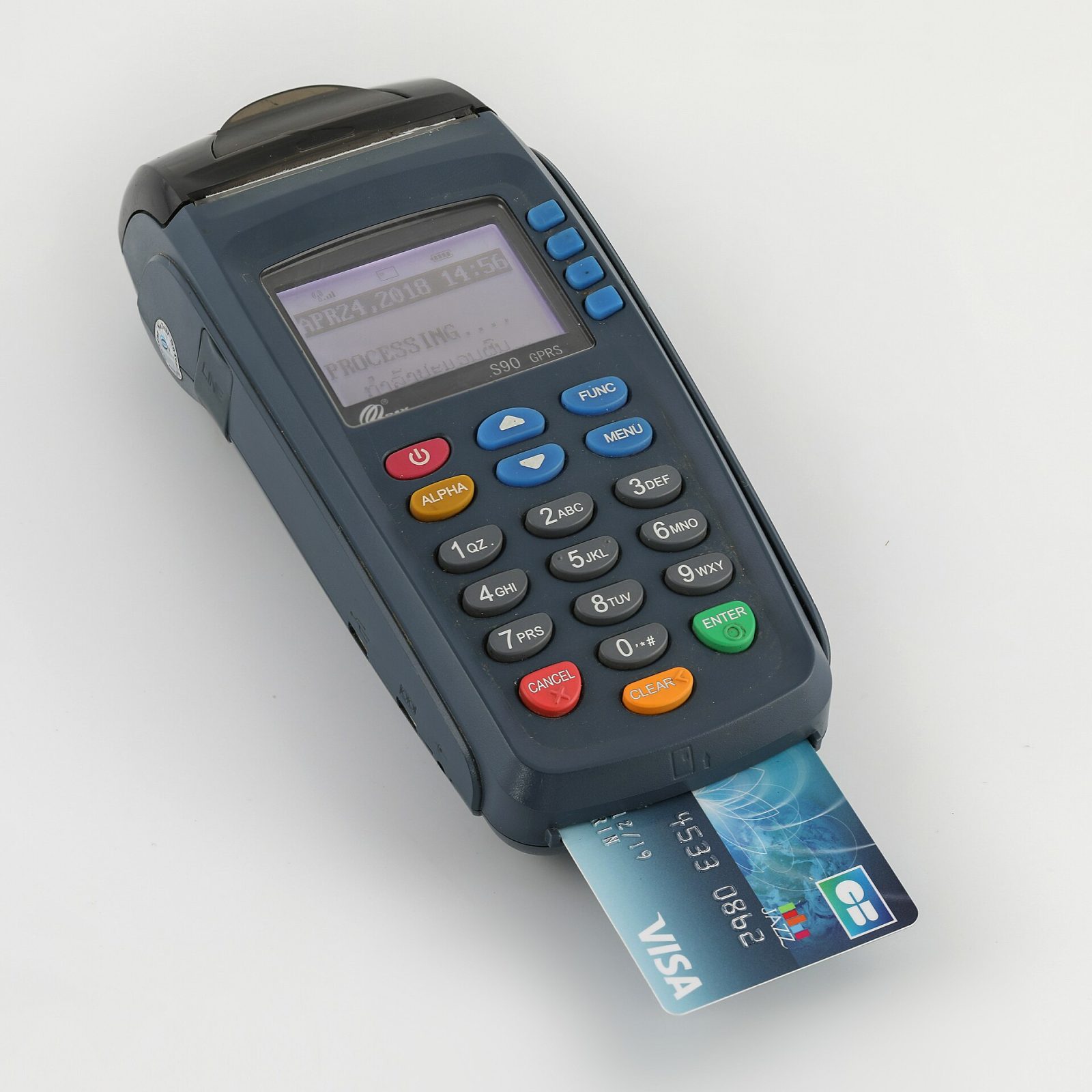
Photo: Credit card terminal in Laos by Basile Morin, CC BY-SA 4.0, via Wikimedia Commons
Peak season makes this more pressing. Chargebacks911 warned in October that, with holiday shopping starting earlier, disputes from the Golden Quarter can carry on landing well into the new year. As its founder put it, "A sale can look successful in December and become a refund, dispute or chargeback weeks later."
How does a chargeback actually work?
Chargebacks are not a law. They are part of the card scheme rules that banks sign up to, which is why the process feels the same whichever card machine you use. In broad terms:
- Your customer contacts their bank (the card issuer) and disputes a payment.
- The issuer raises the dispute through Visa or Mastercard to your payment provider.
- Your provider tells you, usually by email or in your dashboard, and holds the disputed amount.
- You either accept it or challenge it with evidence, within your provider's deadline.
- The issuer reviews the evidence and makes the final decision.
Which? says customers typically have 120 days from the transaction to raise a chargeback, and for goods or services delivered later the clock can start from when they expected to receive them. So a sale on 20 December could still be disputed in April.
How long do you have to respond?
Less time than your customer. Deadlines vary by provider, so check yours today rather than when the first email arrives. As one example, Square gives UK sellers seven days from its first notification email to submit their information, places an immediate hold on the disputed funds, and says the card issuer can take up to 90 days to decide. Square also says it does not charge a fee for its dispute management on chargebacks, but if you lose, the original processing fee is not refunded. Other providers may charge a fee per dispute, so look for it on your statement or in your agreement.
What this means for your business
The money is not the only cost. A chargeback ties up cash at the busiest time of year, takes staff time to answer, and if you lose, you have usually given away the goods or the service too.
Card fraud has not gone away either. UK Finance's 2026 Fraud Report put losses on UK-issued cards at £594.9 million in 2025, with remote purchase (card-not-present) fraud at £423.5 million, its highest total since 2020. Those are losses to the banking system as a whole, not to shops, but they explain why issuers look hard at any payment that was not made with the card present.
Which disputes are hardest to win?
- Keyed-in payments. Trade press has reported thieves distracting staff while an accomplice types stolen card details into the terminal's manual entry function. The card was never present, so these are hard to defend.
- Swiped chip cards. Square warns that if you swipe a chip card instead of inserting it, you may have to cover the loss if the payment is disputed.
- "Item not received" on deliveries and click-and-collect where you have no proof of collection or delivery.
- Refund abuse, where a genuine card is used and the customer later claims the goods were faulty or never arrived.
Five steps to take before the Christmas rush
- Find your deadline. Log in to your provider's dashboard or read your merchant agreement and note how many days you get to respond and who in your team gets the emails. Put it on the wall by the till.
- Switch off manual key entry if you do not need it. Many providers can disable it on request. Ask them, then test it, because retailers have reported the function still working after it was supposedly turned off.
- Make the customer insert or tap. Train staff to insert chip cards or take contactless payments, and to call a manager if a card "won't read" and the customer suggests swiping or typing in the number.
- Keep the paper trail. Itemised receipts, signed collection notes, delivery tracking, booking confirmations, CCTV time stamps and messages with the customer are the evidence issuers ask for. Keep them for at least 120 days after the sale, and longer for anything delivered late.
- Make your trading name recognisable. Customers sometimes dispute a payment simply because they do not recognise the name on their bank statement. Check what descriptor your provider shows and ask to change it if it does not match the name over your door.
A clear, visible refund and returns policy helps too. It will not stop a customer going to their bank, but it gives you something specific to point to when you respond.
When should you accept a chargeback?
If the customer has a fair point, refunding them quickly is often cheaper than fighting. Under Square's process, for example, you can choose to return the funds instead of challenging. Save your effort for disputes where you have strong evidence, such as a chip-and-PIN receipt, a signed collection note or proof of delivery.
Frequently asked questions
Can a customer still dispute a payment if they entered their PIN?
Yes. A PIN shows the card was present, which is strong evidence against a fraud claim, but a customer can still dispute on other grounds, such as goods not received or not as described. Keep the receipt and any proof of what you supplied.
Do chargebacks affect my card fees?
They can. Some providers charge a fee per dispute, and a high dispute rate can lead a provider to review your account. Check your agreement and statements so you know what applies to you.
Is a chargeback the same as a refund?
No. You choose to give a refund. A chargeback is taken back through the customer's bank, and you have to respond to it within your provider's deadline.
Talk to us before peak season
If you are not sure what your current provider charges for disputes, how fast your funds are held, or whether manual entry is switched on, we can go through it with you as part of a free card fee review. We go through your statement with you, including any dispute or chargeback charges, and explain what you are paying for. If a new set-up would suit you better, we can talk you through card machines or Square POS setup.
Call or WhatsApp 07777 175890.
Jos Finserv Ltd (company no. 14560046) is an independent broker. For business finance we are a credit broker, not a lender, and we may receive commission from providers. Approval and terms depend on your trading history. No obligation.
Sources
Want us to look at your own numbers?
Tell us how to reach you and we will come back with what is actually available for a business like yours. We are paid by the provider, not by you, so this costs you nothing either way.
- We read your current statement and explain it in plain terms
- No obligation, and no pressure to move if you are already well placed
- One conversation, not a sequence of calls
Prefer to work it out yourself first? Use the card fee calculator, or check whether finance is worth exploring.
